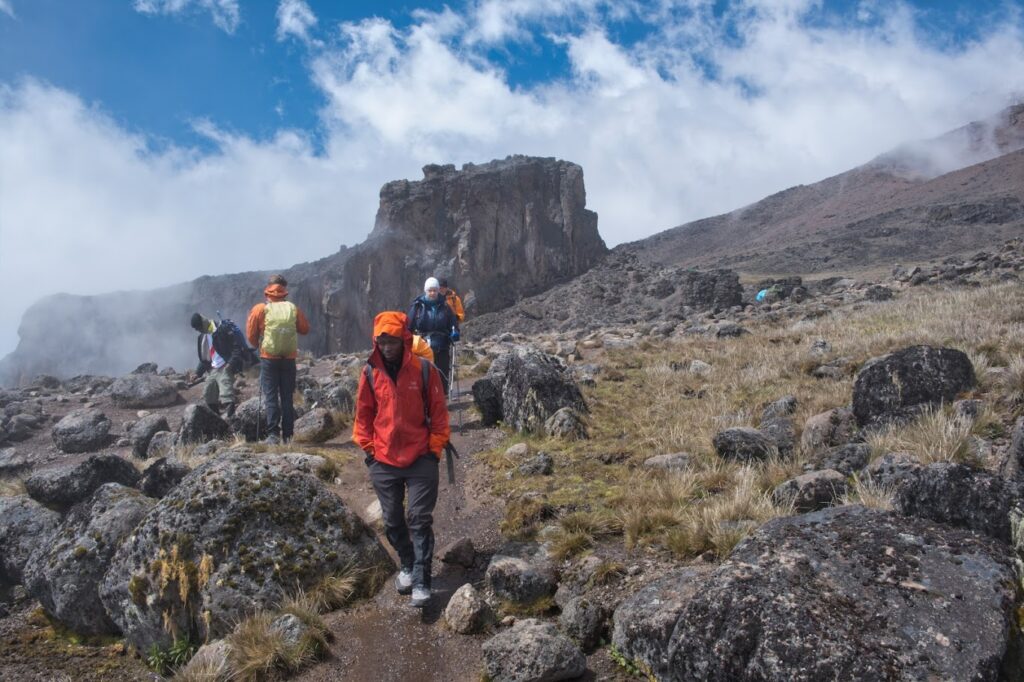
There are seven established routes to climb Mount Kilimanjaro. Although they all go to the same destination, Uhuru Point (5895m), there are considerable differences between them. Some routes are shorter and steeper while others are longer and more gradual.
The duration of your trip is quite significant. So in the interest of client safety and enjoyment, we always advise our clients to use the longer routes.
MACHAME ROUTE
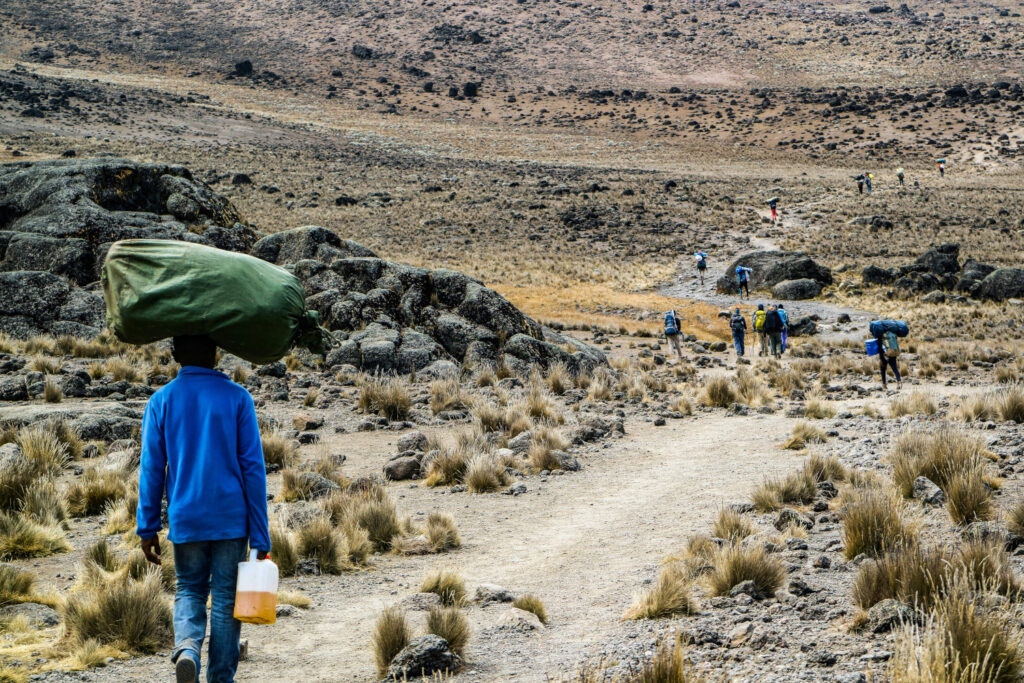
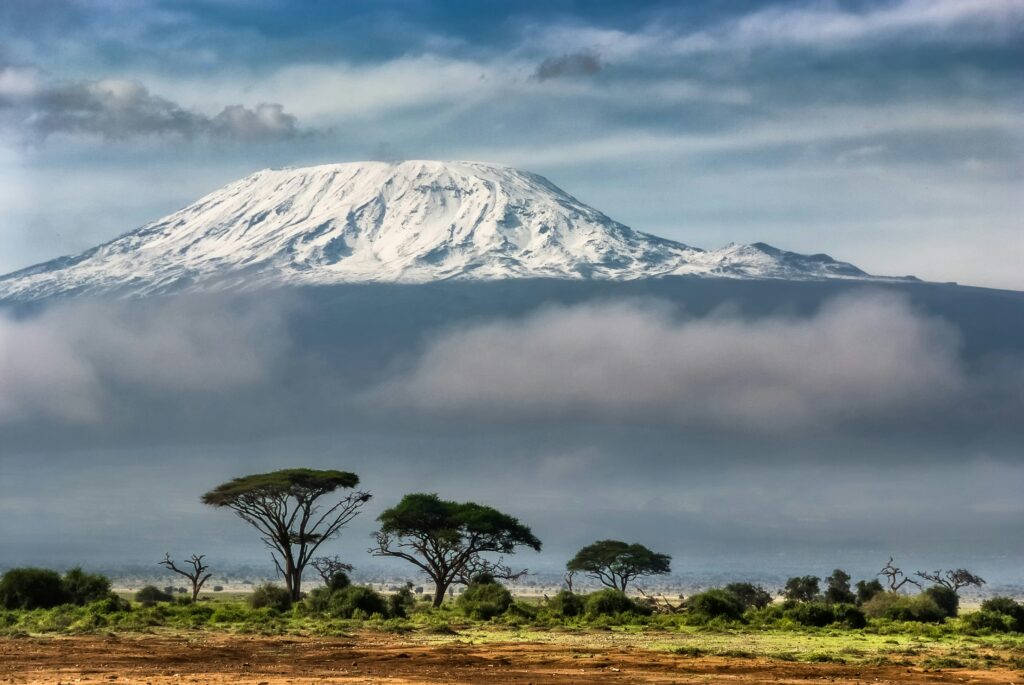
The Machame Route is one of the most popular routes for climbing Mount Kilimanjaro, located on the southern side of the mountain. Known for its beautiful scenery, this route features a relatively gradual ascent, making it a favorite for many trekkers. You can choose to complete it in 6, 7, or 8 days, depending on your available time and budget. The Machame Route is a camping route and is often referred to as one of the two “Whiskey Routes” on the mountain, the other being the Marangu Route, which is known for its huts instead of campsites.
This route’s gradual ascent helps with acclimatization, making it a great choice for those aiming for a higher success rate in reaching the summit.
Getting there: The drive to Machame gate is a about 45 minutes from Moshi and it crosses the cultivation zone. You can see numerous of villages, coffee and banana farms on your way to the gate. Once you arrive at the gate we do registration in Kilimanjaro national park log book, pay the entrance fee and get validly permit, after which hiking can start at 1800m.
7 DAYS KILIMANJARO CLIMB – MACHAME ROUTE
Climbing Machame in 7 days is very comfortable, and it provides enough time for acclimatization. No camp is skipped, and the route follows the pattern of hiking to a high altitude during the day and sleeping at a lower altitude at night.
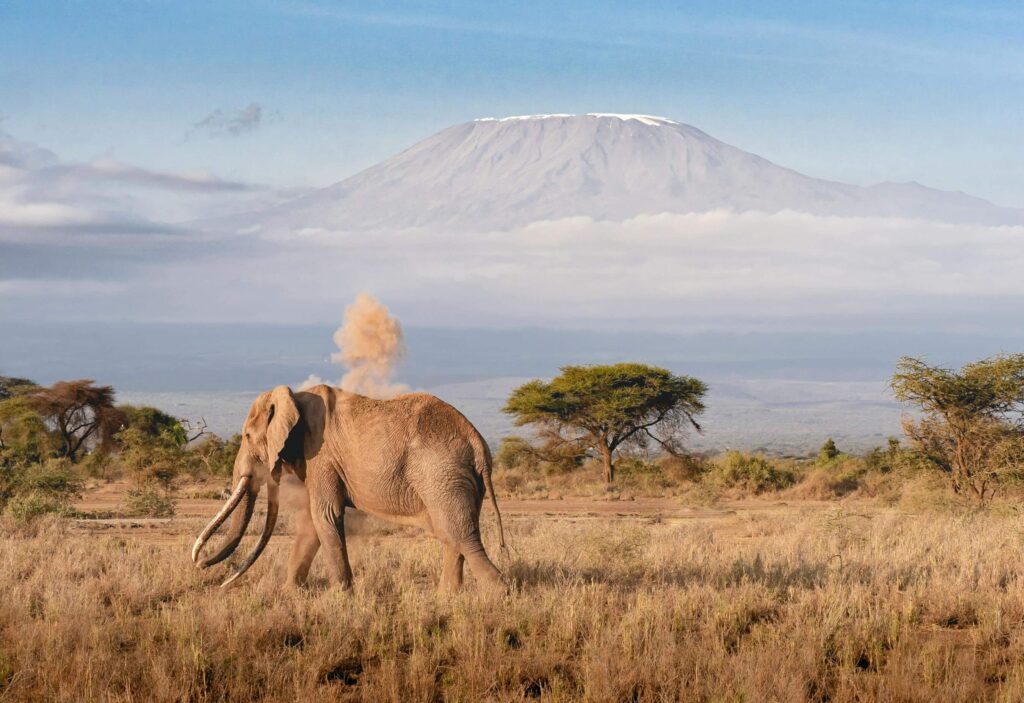
Day 1: Machame Camp (2835m / 9301ft)
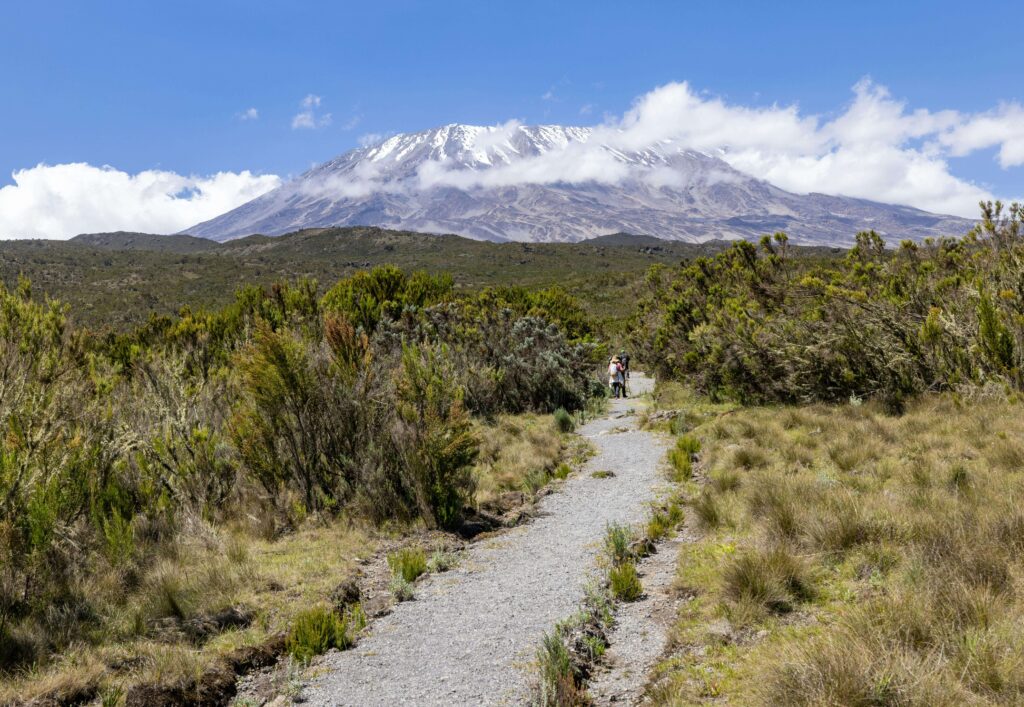
The first part of the 11km trail from Machame gate at 1800m to Machame camp follows a gravel road and is very easy to walk. It is a gradual ascend and not very steep. You cross the rain forest and on the way you might see Black and White Colobus and Blue Monkeys. After a short lunch break the trail gets steeper and the forest gets thinner. If the weather conditions allow it, you will get a nice view of your ultimate destination, Kibo Peak, at the end of the day.
Day 2: Shira Cave (3750m / 12303ft)
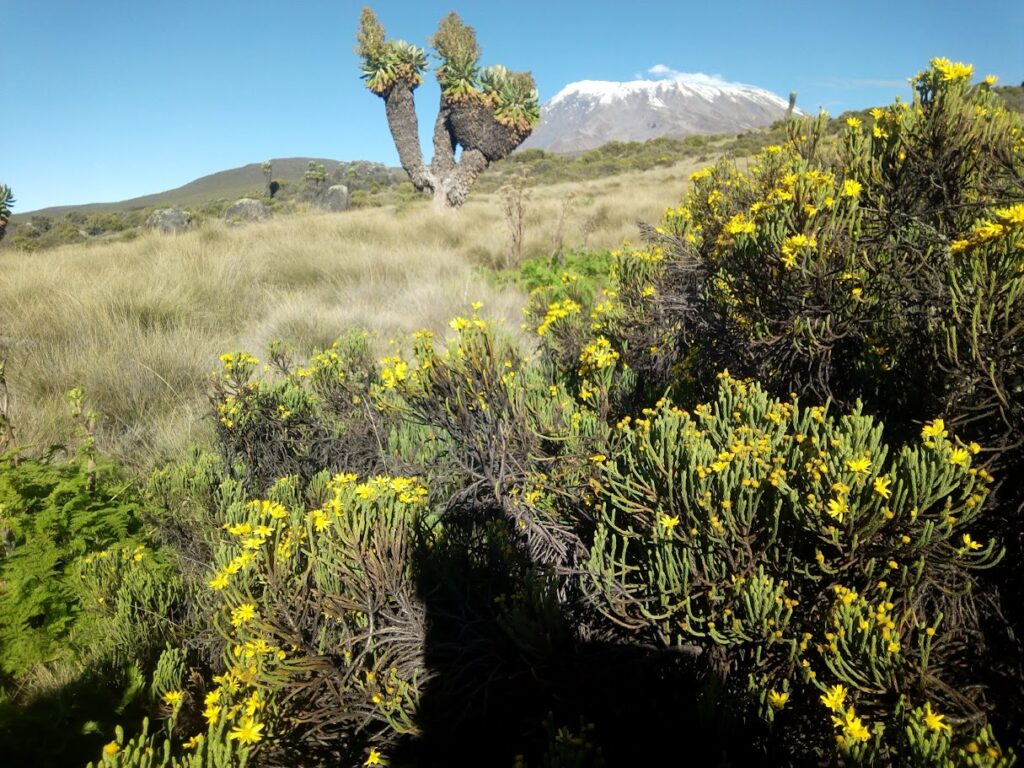
The way from Machame camp to Shira camp is only 5km long, but quite steep at the beginning. It leads through the moorland zone of the mountain. There are several viewpoints with a nice view of mount Meru, the forest you walked through on day 1, Shira and Kibo peaks.
After reaching the camp you can optionally take a short walk of about 45 minutes to 1 hour for acclimatization and a nice view of the sunset.
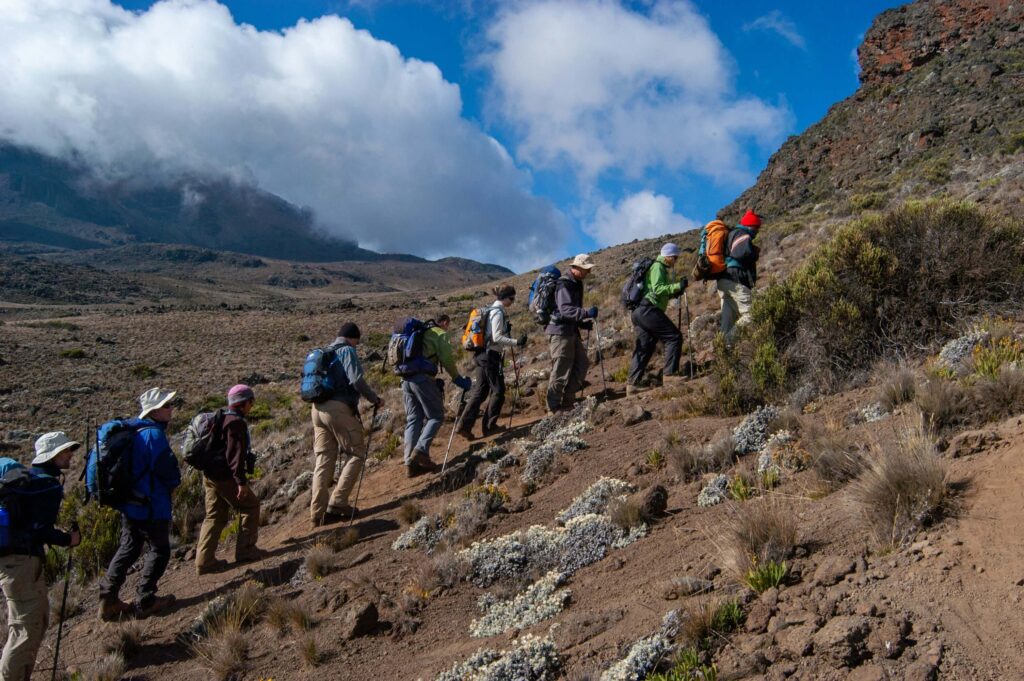
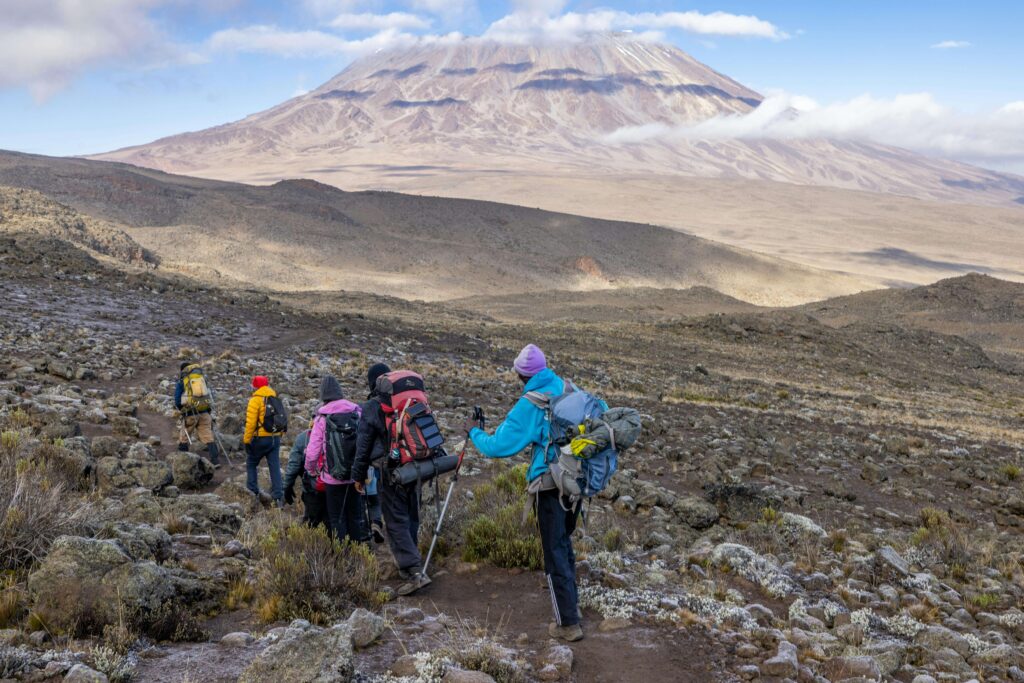
Day 3: Baranco Camp (3940m / 12927ft)
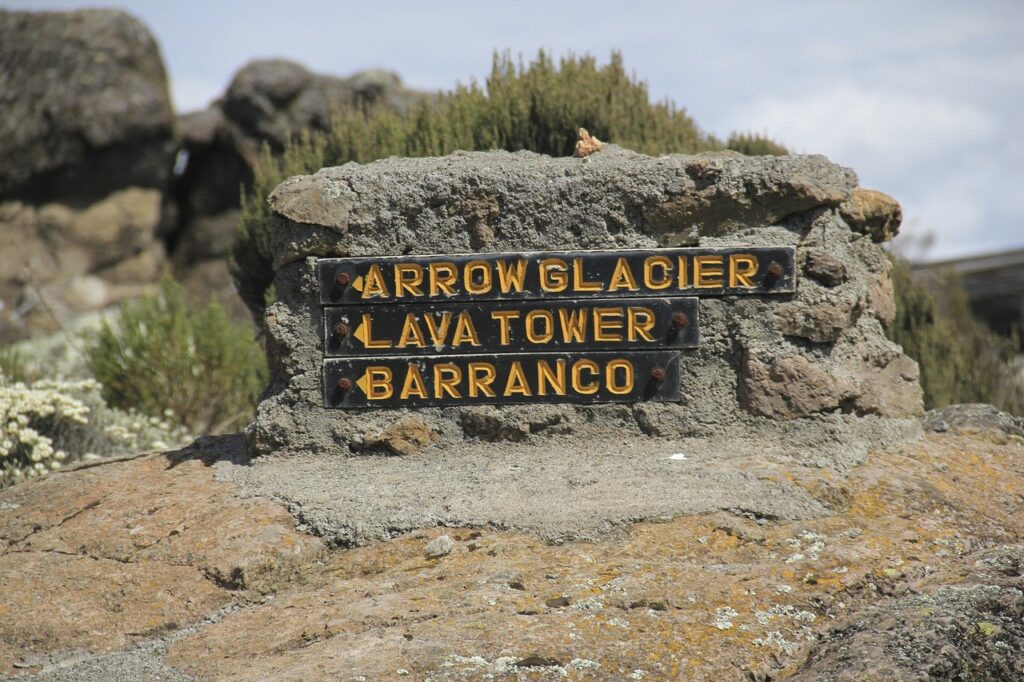
The way from Shira Cave to Baranco camp is 10km long and will take 6-7 hours, including lunch. At the beginning it will be a gradual walk to the junction point where we meet people from the Western routes. Join them and walk straight to Lava Tower (4600m), a 150m high volcanic lava plug that juts out of the side of mountain. The lunch will be at lava tower rest for few minutes then descend down to Baranco camp.
Day 4: Karanga Camp (3995m / 13107ft)
From Baranco camp to Karanga camp it takes 3 – 5 hours and distance is 6km and you will cross Breakfast or Baranco Wall, which is 300m high. The peak of the wall is at 4200m. This part is challenging because the trail is narrow and the number of hikers, porters and guides is large. In some parts you have to use your hands for climbing. You will cross the famous places called Kissing Rock. Shortly before Karanga Camp you will cross the Karanga Valley at 3930m which is the last point where porters can fetch water.
Day 5: Barafu Camp (4673m / 15331ft)
It will only take 3 to 4 hours to the cover distance of 4km from Karanga to Barafu Camp. It is gradual steep walk and (pole pole) slow walking is recommended for acclimatization. You will be in the alpine desert and at the left side you can see the Kibo Peak and few meters before Barafu you will cross the section occupied with Sedimentary rocks. Barafu camp is the dry camp but our team will carry water from Karanga valley.
Summit Night: You will wake up around 11:00pm, for some tea and snacks and dress up warm for the summit. At 12:00am you will start your summit with steep rocks for about 2 to 3 hours, and then you will start crossing the zigzag area and keep moving to the crater rim and finally Stella point, 5756m around 06:00amThis is the most mentally and physically challenging portion of the trek.
At Stella Point 5756m, you will stop for a short rest and will be rewarded with the most magnificent sunrise you are ever likely to see (weather permitting). From Stella Point, you may encounter snow all the way on your 1-hour ascent to the summit. At Uhuru Peak 5895m (193341ft), you have reached the highest point on Mount Kilimanjaro and the continent of Africa. Faster hikers will see the sunrise from the summit.
From the summit, we now make our descent continuing straight down to the Mweka Hut camp site, stopping at Barafu for short rest and brunch.
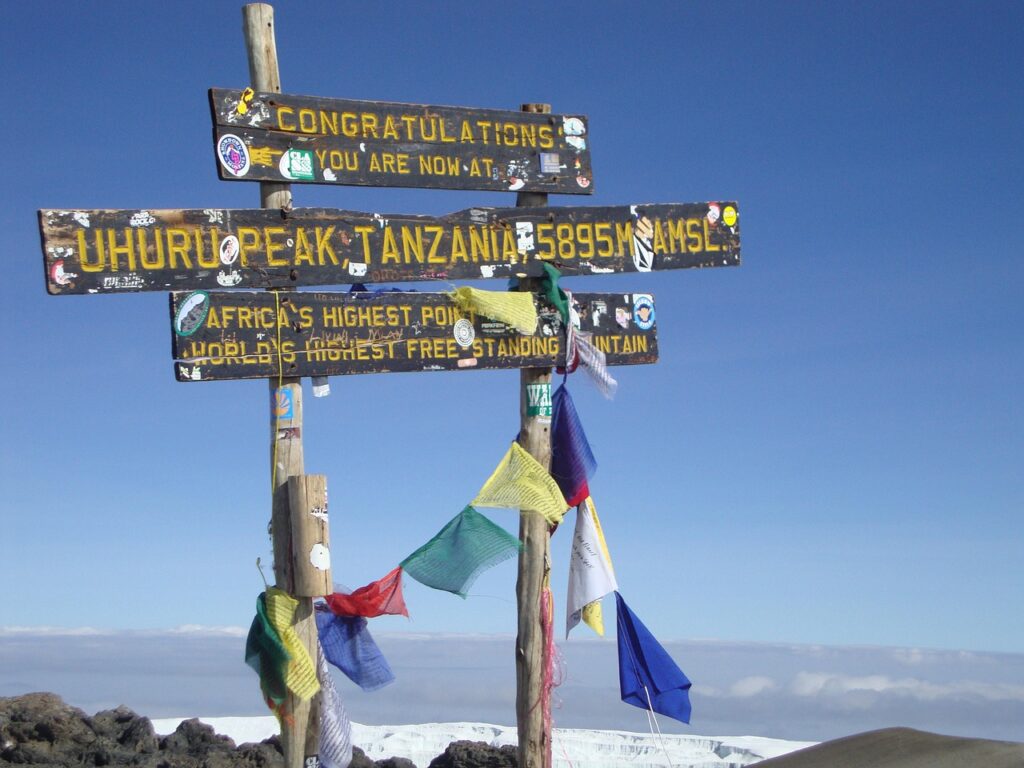
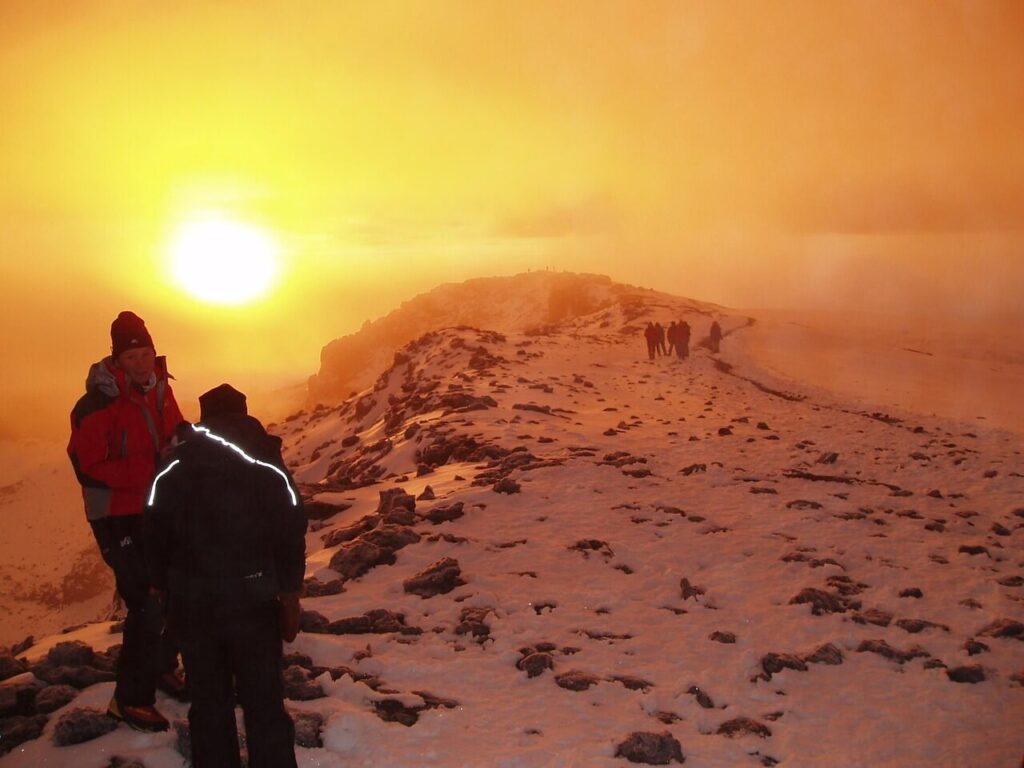
Day 6: Mweka Camp (3100m / 10171ft)
The descend via Mweka route starts at Barafu camp via Millennium Camp 3797m. The way is steep, and it just takes only 2-3 hours to cover the 4km to Millennium Camp. You will pass from the alpine desert to the moorland zone.
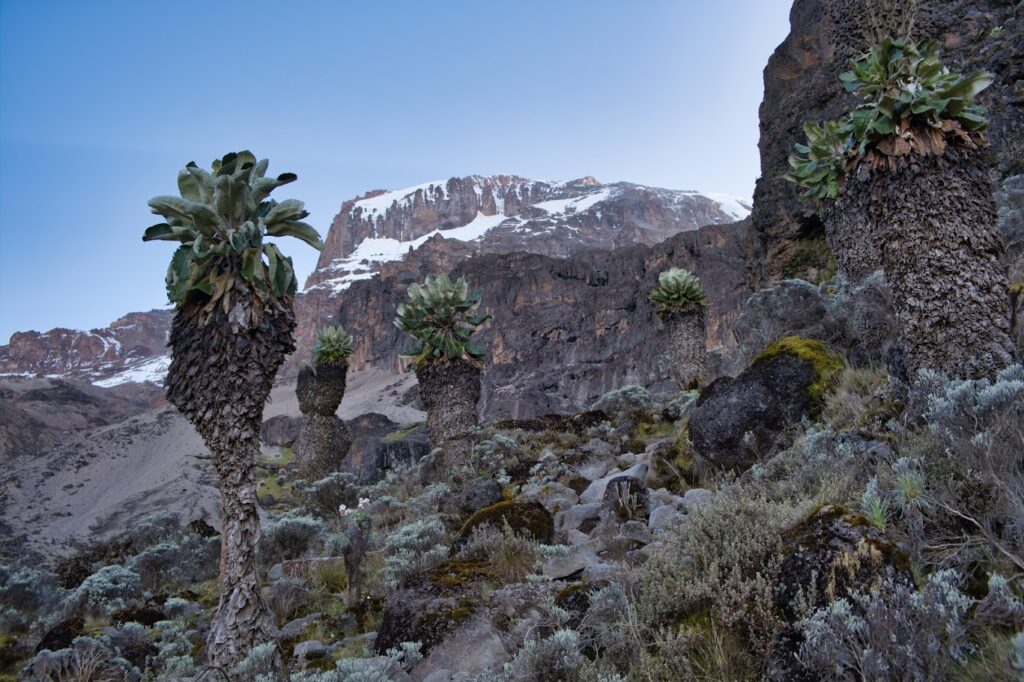
From Millennium Camp to Mweka camp 3100m is also a steep walk which takes 2 – 3 hours for 3.5km. You will cross the moorland to the forest zone and on the way you will see Protea Kilimandscharica and Red Hot Poker and various other species of flowers and plants.
Day 7: Mweka Gate (1640m / 5381ft) and Drive to Moshi
The final leg of the trek takes you from Mweka Camp to Mweka Gate, a steep 10km descent that takes about 4-5 hours. The rainforest floor is wet and slippery, requiring careful and slow walking. You are again in the rain forest where you will see various species of flowers like Impatiens Kilimanjari and different trees species and also if your lucky you might see Blue Monkey and Black and White Colobus Monkeys.
At the Mweka Gate:
Once you reach Mweka Gate you have to sign out in Kilimanjaro national park log book, our guide will collect certificate for those who made successful climb to Stella Point and Uhuru Point. Then we will drive you via Mweka village to your Hotel in Moshi/Arusha for long shower and Kilimanjaro beer.
6 DAYS KILIMANJARO CLIMB – MACHAME ROUTE
For those opting for a 6-day climb, the Karanga Camp (Day 4) is skipped, and you’ll continue directly from Baranco Camp to Barafu Camp on Day 4. This adjustment shortens the trek by a day, but it also increases the distance between camps.
Distance: 8.5km / 5 miles
Walking Time: 6-8 hours
Altitude Gain: 676m
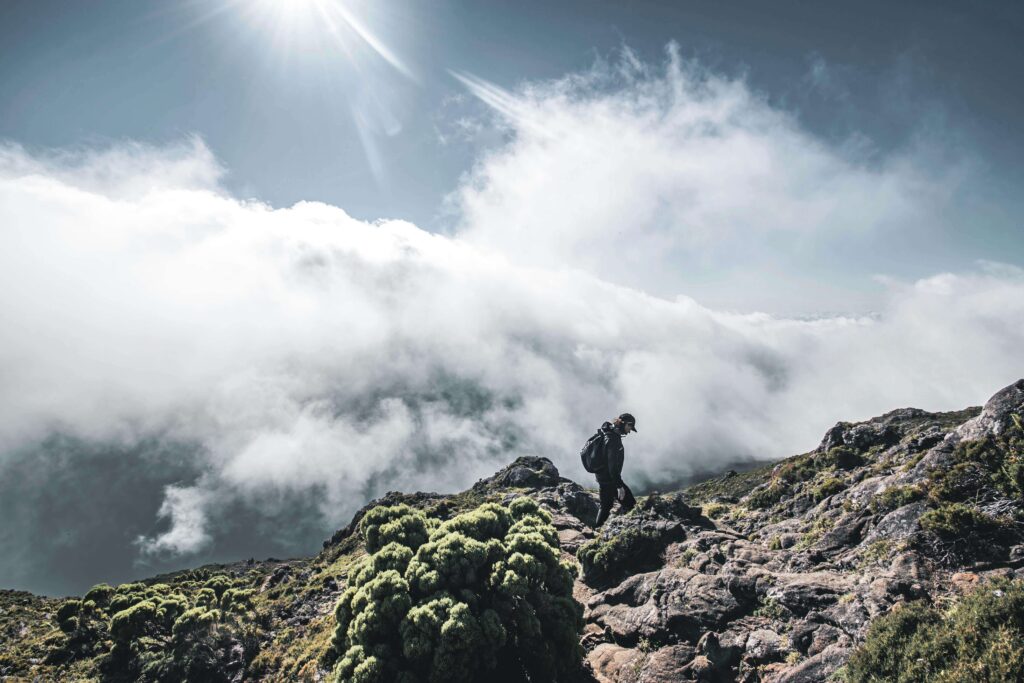
After breakfast on Day 4, the trek begins with a steep climb up the Barranco Wall, a challenging and iconic section of the route. Once over the wall, you’ll hike through the “Nut Valley” before reaching the junction where the Machame Route connects with the Mweka Trail. This section of the day is considered one of the most interesting, with stunning views and varied terrain.
Once you reach Karanga Camp, you’ll stop for lunch. Afterward, instead of staying at Karanga, you’ll continue the hike on to Barafu Camp, the base camp for summit attempts.
After arriving at Barafu, you’ll have an early dinner and rest in preparation for summit night. Overnight at Barafu Camp.
By omitting Karanga Camp and heading straight to Barafu on the same day, this 6-day version expedites your ascent, but it is important to note that this may make the trek a bit more challenging because of the longer hike between camps. It’s a good idea to ensure proper acclimatization and pacing on such an itinerary to help with the climb’s success. Let me know if you’d like more details on this!
MARANGU ROUTE
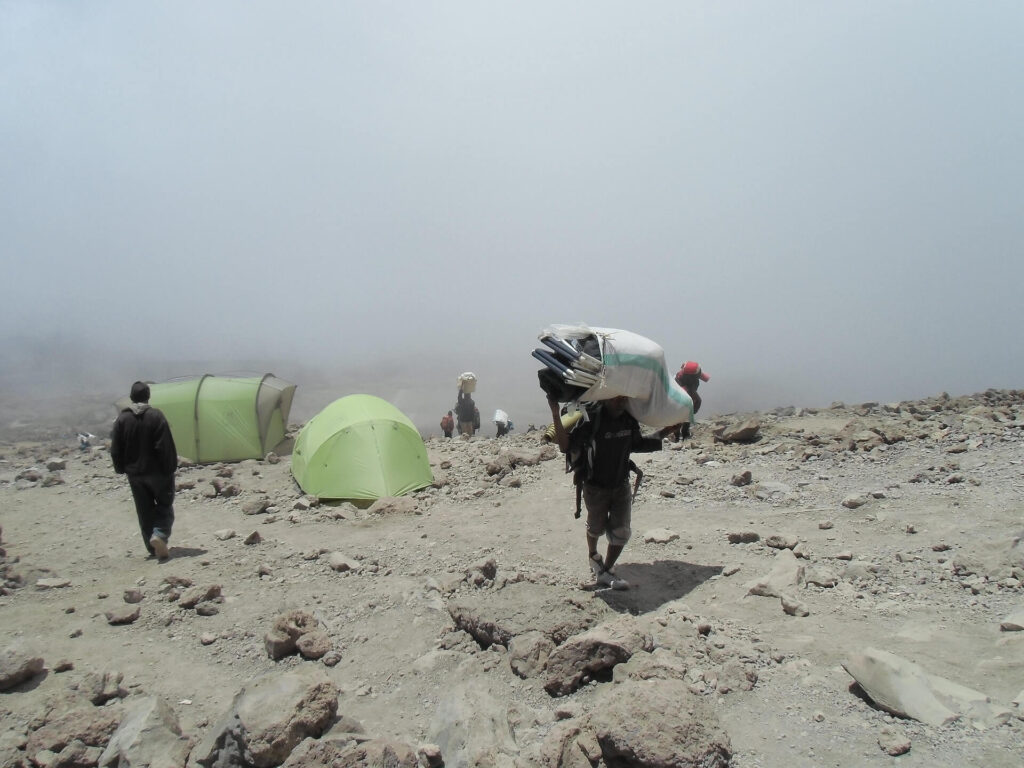
Marangu Route is also known as the “Coca Cola” or “tourist” route. It is the easiest and shortest route to the summit. This is also the only route with the comforts of sleeping huts at every camp site with solar lights and comfortable beds. The huts are communal, and the huts have a sponge mattress, pillow and solar power.
There are 60 beds at both Mandara and Kibo Huts and 120 beds at Horombo Hut. Bathrooms and running water are available at the two lower huts, but at Kibo hut running water is not available because its dry camp. All climbing groups, often from several countries around the world, share meals in dining huts providing a jovial and energetic atmosphere.
This route is usually done in 5 days but can be done in 6 days for better acclimatization. The extra day can be spent resting at Horombo or conduct nature walk to Zebra rock.
5 DAYS KILIMANJARO CLIMB – MARANGU ROUTE
Day 1: Mandara Hut (2720m / 8924 ft)
The way from the Marangu gate 1879m to Mandara hut is 8km long and will take 3-4 hours including a lunch break. You will cross rain forest after the entry formalities at the gate. In the forest you can see Blue Monkeys and Black and White Colobus.
If the arrival time at the camp permits we can take a 15 minute trip to Maundi crater, a volcanic crater that did not erupt due to the lack of magma pressure and fell down instead. You will have a nice view Mawenzi and Kibo peak. If the weather permits you will see the eastern part of the mountain, the border area between Tanzania and Kenya and Lake Chala in the distance.
Day 2: Horombo Hut (3720m / 12205 ft)
It will take 5-6 hours to walk for 11km from Mandara Hut to Horombo Hut, including lunch. You will be in the moorland zone. At the Horombo there are 120 beds (extra space for people walking down). You will be supplied with mattresses and pillows, also here are dining halls, toilets and solar power.
Day 3: Kibo Hut (4720m / 15486 ft)
The walk of 9km to Kibo hut will take 4-5 hours including lunch. You will cross the Alpine desert, which is characterized by having strong winds, especially at the saddle area between Mawenzi and Kibo peak. Kibo hut is a dry camp, but the porters will carry water from Horombo hut. There are 60 beds with mattresses and pillows. There are no dedicated dining halls, so you will eat dinner in your room. There are toilets and solar power.
At Kibo hut you will join the climbers from Rongai route, but they will sleep in their tents. You will walk with them on the way to the summit.
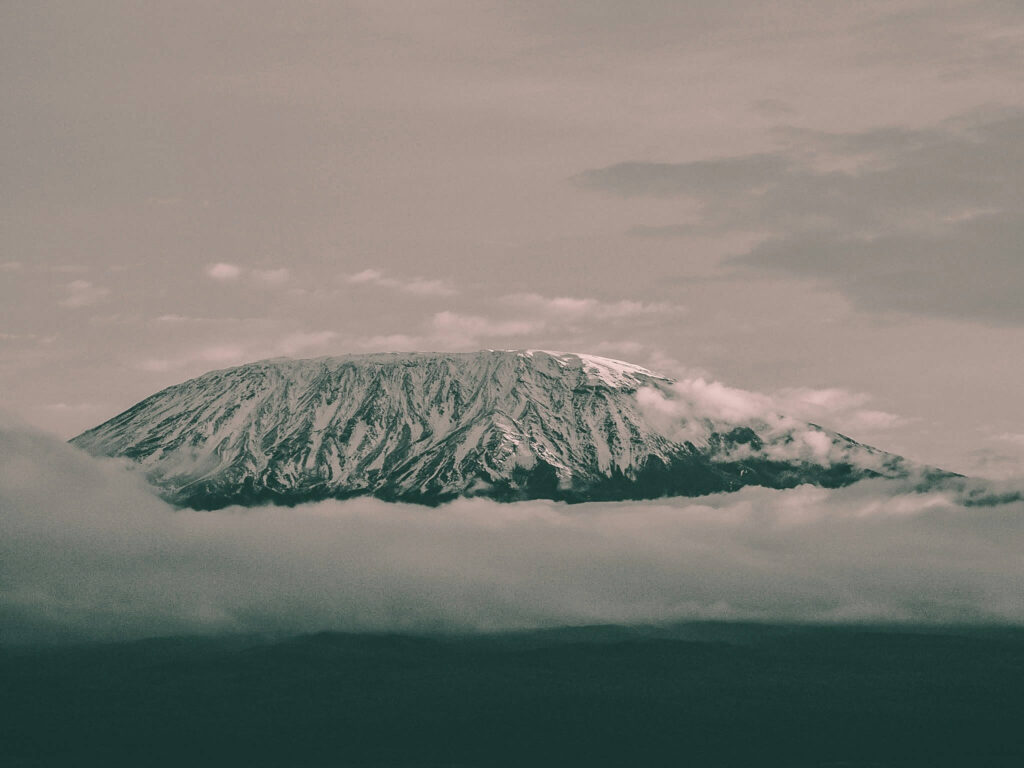
Summit Night: The climb to the summit starts around midnight. The way is 6 kilometers long, but steep. It will take 6 to 8 hours. The early starting time allows you to see the sunrise on the top of the mountain. The route is a steep zigzag route. The first point you will reach Gilman’s point at 5685m, which is located at the crater rim. Then you walk about one kilometer along the crater to Stella point (5756m), where you will meet people climbing up all the other routes. The way from Stella point to Uhuru peak (5895m / 19341ft), the highest point of Africa, is a slow ascend that takes about 45 minutes.
We recommend to stay only for 10 minutes at Uhuru peak for view and pictures and then descend via the same route to Kibo camp.
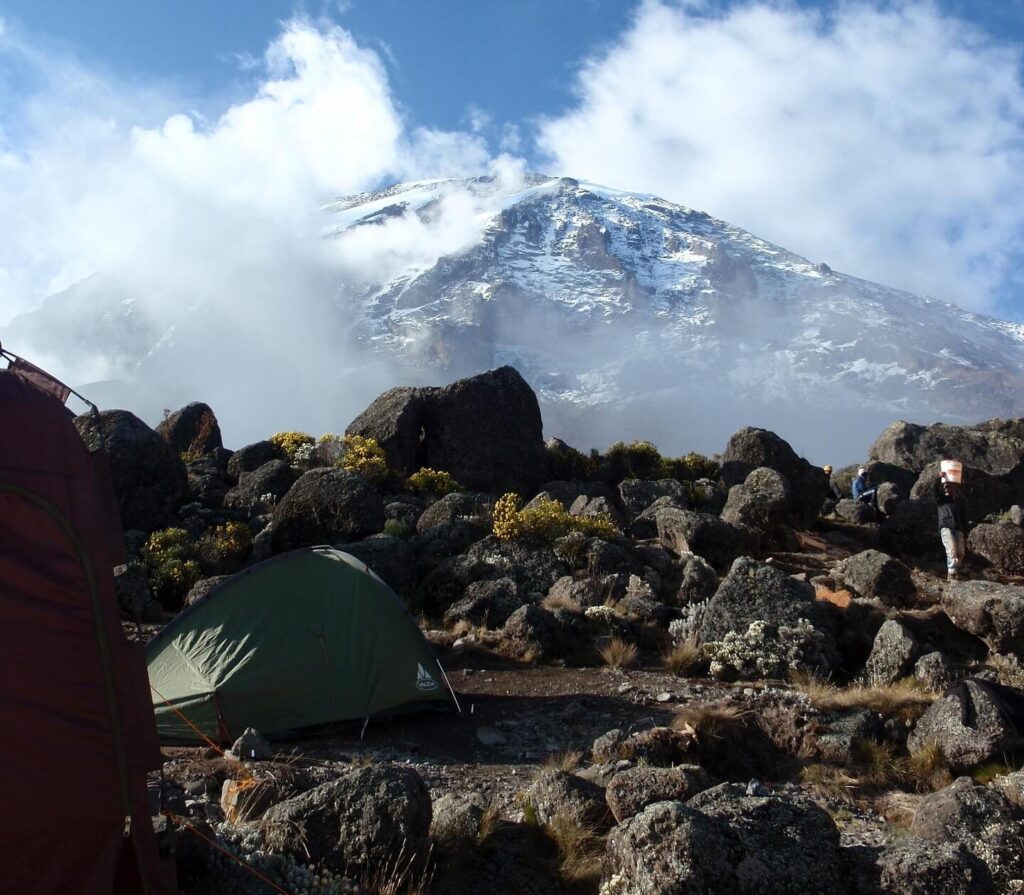
Day 4: Descending down to Horombo hut
After sleep and brunch you will walk down for 9km and 4-5 hours and spend a night at Horombo hut.
Day 5: Descending down to Marangu gate and Drive to Moshi
The way from Horombo to Marangu gate is 19km. The first part is the 11km walk from Horombo to Mandara where you will stop for lunch. After lunch you will walk again for 8km from Mandara to Marangu gate. The total walking time will be 6 – 8 hours, depending on the speed of the client. After you reach at the gate you will sign out and receive a certificate confirming your successful climb to Gilman’s, Stella and Uhuru peak. Afterwards we will drive you about 45m from the gate to your hotel in Moshi. 6 days marangu route trekking kilimanjaro
6 DAYS KILIMANJARO CLIMB – MARANGU ROUTE
The difference compared to the 5 day climb is that you spend two night in Horombo hut for acclimatization. During the day in between you walk for 6 round trip kilometers to a place called Zebra rock at a height of about 3900m for acclimatization.
LEMOSHO ROUTE
The Lemosho Route is widely regarded as the most scenic and dramatic route on Kilimanjaro. It is also one of the more remote routes, making it less crowded and ideal for those seeking a more tranquil experience. The route traverses some of Kilimanjaro’s most stunning and least traveled landscapes, including the base of Kibo Peak and the dramatic south-facing glaciers.
One of the key highlights of the Lemosho Route is its passage across the Shira Plateau, a UNESCO World Heritage Site, which provides a unique perspective as you trek around 180 degrees of the mountain.
Additionally, this route offers plenty of time to acclimatize to the high altitude, which is crucial for your safety, comfort, and overall success. Proper acclimatization significantly increases the chances of reaching the summit without altitude sickness.
The Lemosho Route can be completed in 6, 7, or 8 days. However, we strongly recommend the 8-Day Lemosho Route for optimal acclimatization and to allow enough time for your body to adjust to the altitude before the final push to the summit.
8 DAYS KILIMANJARO CLIMB – LEMOSHO ROUTE
Day 1: Drive to Mti Mkubwa Camp (2650m / 9100ft)
After breakfast, you’ll drive for 2-3 hours to the Londorosi Gate for registration and to obtain your entry permit. From there, you’ll drive another hour to the Lemosho starting point. Upon arrival, you’ll enjoy a picnic lunch before meeting your full climbing crew, including guides, cooks, and porters, who will accompany you on the trek.
Day 2: Shira 1 Camp (3650m / 11500ft)
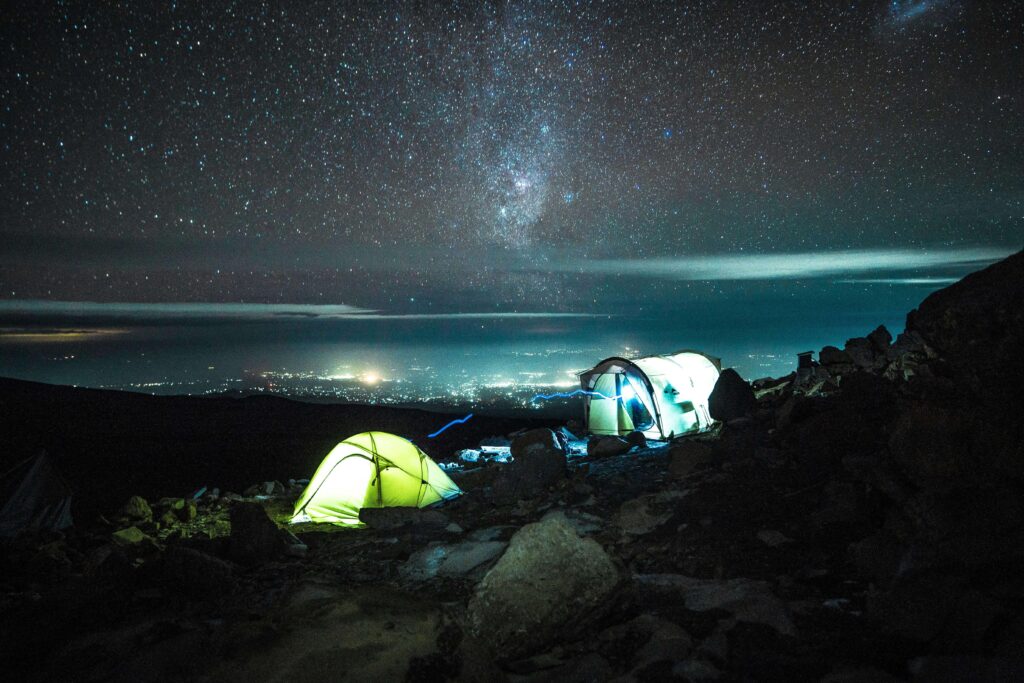
Today’s hike will take approximately 6-7 hours, covering a distance of 7 km. The trek begins with a 2-hour walk through the moorland zone on the west side of the Shira Plateau. You’ll pass old lava flows, take breaks for acclimatization, and enjoy the stunning scenery before arriving at your camp for the night.
Day 3: Moir Hut (4200m / 13800ft)
Expect a 4-6 hour hike covering 9 km today. You’ll cross the Shira Plateau, a UNESCO World Heritage site, and stop for lunch at Fisher’s Point. Afterward, you’ll continue for another 1-2 hours through the moorland zone, eventually reaching your overnight camp at the base of a massive lava flow.
Day 4: Barranco Camp (3940m / 13044ft)
Today’s trek will take 6-8 hours and cover 9 km. You’ll begin with a steep climb and then steadily ascend toward Lava Tower, a 150-meter-high volcanic plug. After a lunch stop, some climbers may begin to experience mild headaches due to the altitude. You’ll then descend for about 2 hours through a rocky trail, reaching Barranco Camp for the night.
Day 5: Karanga Camp (3995m / 13106ft)
This is a shorter hiking day, taking 4-6 hours to cover 6 km. The main challenge is the Baranco Wall, a steep section requiring some scrambling. Once at the top, you’ll enjoy views of Baranco Valley and your previous campsite. From there, you’ll descend into Karanga Valley, the last water source on the route, before reaching Karanga Camp for lunch and an overnight stay.
Day 6: Barafu Camp (4600m / 15330ft)
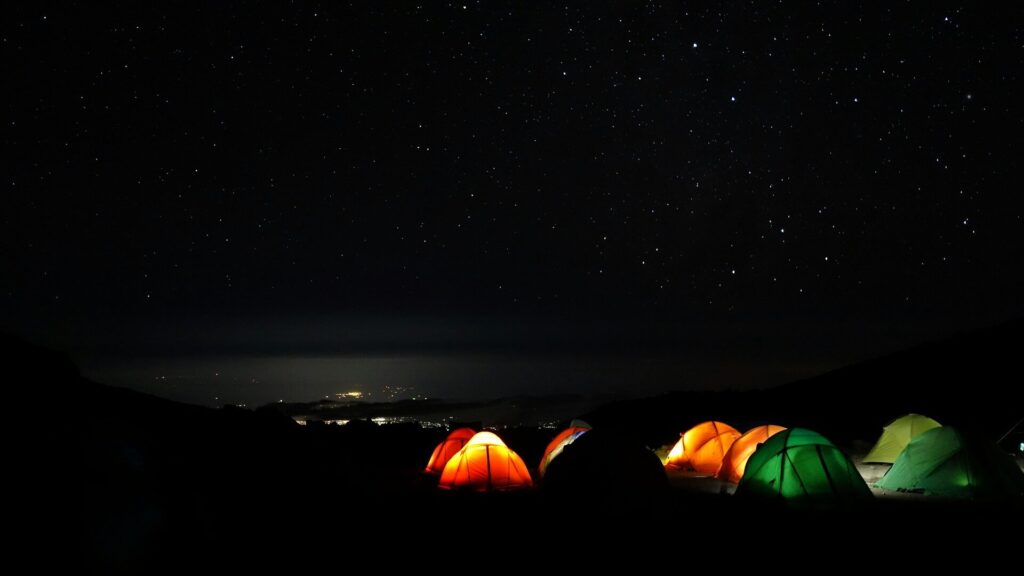
Today’s hike takes 3-5 hours to cover 4 km. The terrain is steep with boulders and shattered rock as you climb through the upper alpine desert. After passing through rocky sections, you’ll reach Barafu Camp, where you’ll have an early dinner and rest in preparation for your summit attempt later that night.
Day 7: Summit to Uhuru Peak (5895m / 19340ft) and Descend to Mweka Hut (3100m / 10065ft)
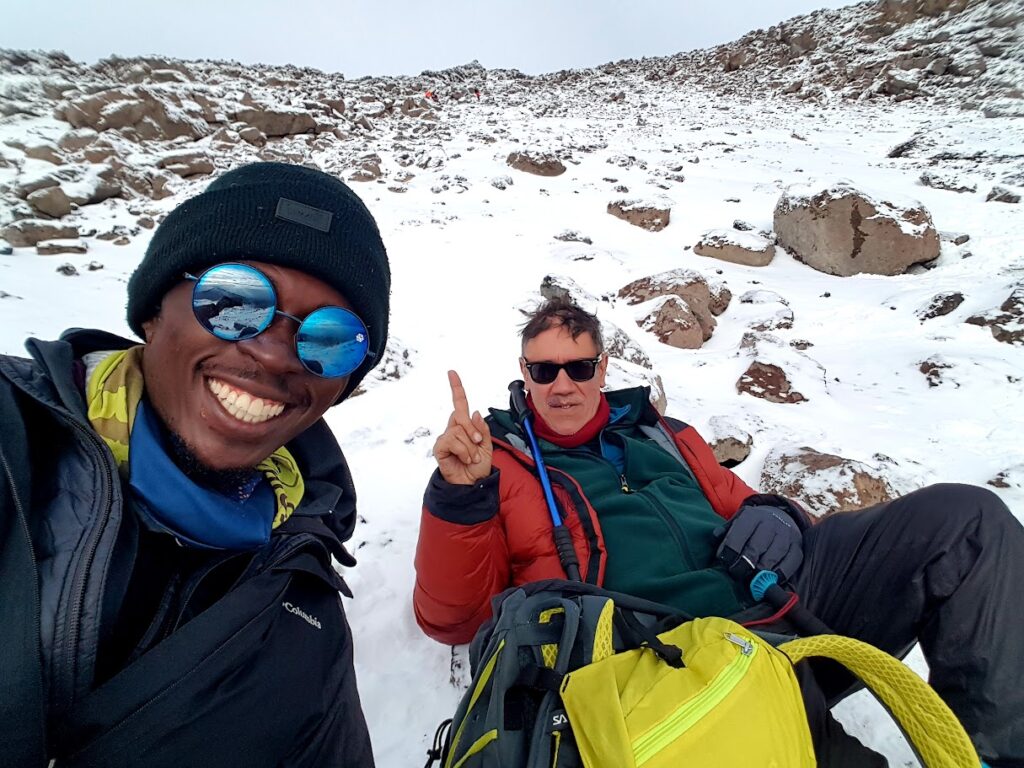
Wake up at 11:00 pm for tea and snacks, then begin your summit attempt around midnight. The first 2-3 hours are a steep rock climb, followed by a zigzag route to the crater rim, where you’ll reach Stella Point (5,756m) around 6 am. From there, you’ll join other climbers heading to Uhuru Peak for the final ascent. After a short stay for photos and views, you’ll descend to Barafu Camp for brunch and rest. The final descent to Mweka Hut takes about 3 hours.
Day 8: Descend to Mweka Gate (1640m / 5380ft)
After breakfast, you’ll begin your 3-4 hour descent through the rainforest to Mweka Gate. Along the way, you may see wildlife such as blue monkeys, black-and-white colobus monkeys, and other species. At the gate, you’ll sign out and receive your summit certificate for those who successfully reached the top. From there, you’ll drive to your hotel in Moshi to relax with a hot shower and a celebratory Kilimanjaro beer.
LONDOROSI ROUTE
Londorosi route, located on the western side of Mount Kilimanjaro, is a less commonly used route that can be climbed in 6-8 days. The 7-day Kilimanjaro Climb via Londorosi Route is also known as the Shira Plateau Route, as it passes through the scenic Shira Plateau. This route is less frequented because it requires a 4×4 vehicle to travel from the Londorosi Gate to the end of the vehicle track, which is about 22 km further along.
Climbing via Shira Plateau route looks similar to the Lemosho route. The only difference is that you’ll drive from Londorosi gate to Morrum barrier, about 22km, which takes less than 2 hour and the hike can start from there. Also via this route can be climbed for 6days, 7Days and 8days but we strongly recommend at least 7days itinerary in order to get more time for relax and acclimatization.
Due to its remote location, the Londorosi Route is best suited for climbers during the dry season. It is a popular choice for honeymooners or those seeking a quieter, less crowded experience, as it tends to have fewer trekkers compared to the more popular routes.
7 DAYS KILIMANJARO CLIMB – LONDOROSI ROUTE
Day 1: Shira 1 Camp (3610m / 11844ft)
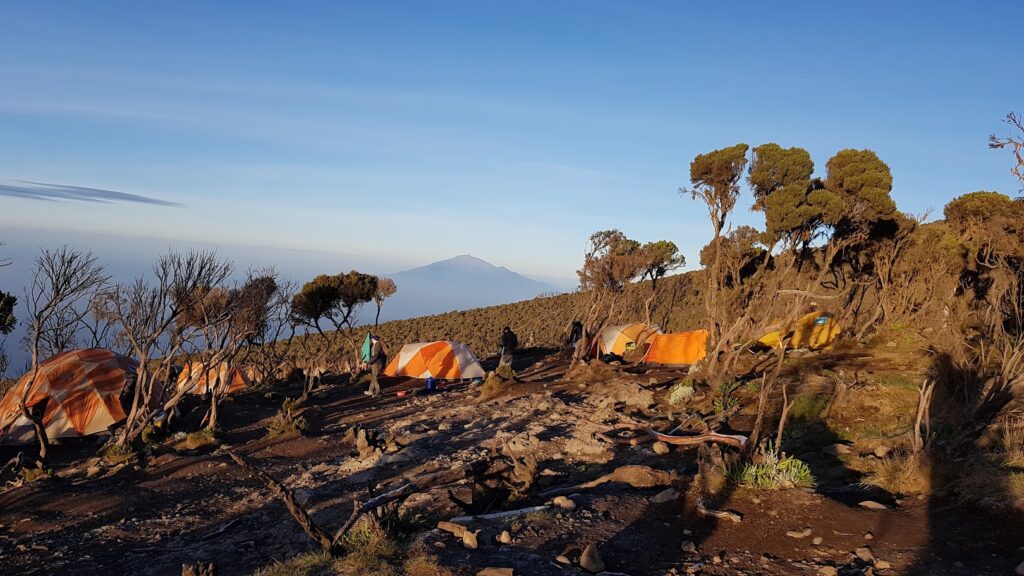
Today’s hike is short and scenic, taking about 1-2 hours to cover a distance of 4 km. We’ll be in the moorland zone, surrounded by clear mountain streams, open tussock grasslands, lava flows, and heather shrublands. As we walk through the western side of the Shira Plateau, you’ll have the chance to enjoy the sun and take breaks for acclimatization. We’ll walk at a slow pace to allow your body to adjust, and after reaching our camp, we’ll settle in for the night.
Day 2: Moir Hut (4200m / 13800ft)
Today, we’ll hike for 4-6 hours, covering 9 km. Our route will take us across the middle of the Shira Plateau, a UNESCO World Heritage site. We’ll stop for a picnic lunch at Fisher’s Point, then continue our walk for 1-2 more hours through the moorland zone. Our overnight camp is located at the base of a massive lava flow, offering stunning views.
Day 3: Baranco Camp (3940m / 13044ft)
Today’s trek takes us 9 km over 6-8 hours through the alpine desert. We’ll start by climbing steep hills with minimal rocks, followed by a steady uphill climb to Lava Tower, a 150m-high volcanic plug that juts from the side of the mountain. We’ll stop for lunch here. Due to the altitude, some people may begin to feel mild headaches. After lunch, we’ll descend for about 2 hours down a dusty and rocky trail to Baranco Camp for the night.
Day 4: Karanga Camp (3995m / 13107ft)
This is a shorter day, with a 4-6 hour hike covering 6 km. We’ll start with a challenging scramble up the Baranco Wall, which takes 1-2 hours. Some sections are steep, requiring you to use your hands to climb over rock boulders—similar to rock climbing but not as technical. Once at the top, you’ll be able to see Baranco Valley and the camp where we stayed the previous night. We’ll then descend into Karanga Valley, the last water source on the mountain, before heading up to Karanga Camp for lunch and overnight.
Day 5: Barafu Camp (4673m / 5331ft)
Today, we’ll tackle a 4 km stretch over 3-5 hours of steep uphill terrain with many boulders and shattered rocks. We’ll pass through the upper alpine desert and climb a steep ridge. We’ll encounter more rocky sections, requiring some scrambling for about 1.5 hours before arriving at Barafu Camp. Here, we’ll have an early dinner and rest, as we need to wake up around midnight to begin our summit ascent.
Day 6: Summit (Uhuru Peak, 5895m / 19341ft) and Descend to Mweka Hut
We’ll wake up around 11:00 pm, enjoy some tea and snacks, and dress warmly for the summit. We’ll start the summit trek at midnight, beginning with steep rocky sections for 2-3 hours. Then, we’ll navigate zigzagging paths towards the crater rim, reaching Stella Point (5756m) by 6:00 am. At Stella Point, we’ll join hikers from other routes and continue the final push to Uhuru Peak (5895m). Here, we’ll take a short break to enjoy the sunrise, snap some photos, and soak in the views. Afterward, we’ll descend for about 3 hours back to Barafu Camp for some rest and brunch before continuing down to Mweka Hut.
Day 7: Descend from Mweka Hut to Mweka Gate (1640m / 5381ft) and Drive Back to Moshi
After breakfast, we’ll gather for group photos and some celebratory Kilimanjaro songs before starting our descent. We’ll walk through the rainforest for about 3-4 hours, covering 10 km. Along the way, you might be lucky enough to see blue monkeys, black-and-white colobus monkeys, and other wildlife. Once we reach Mweka Gate, we’ll sign out in the Kilimanjaro National Park logbook, and our guide will collect summit certificates for those who made it to Uhuru Peak. Then, we’ll drive back to your hotel in Moshi for a refreshing hot shower and a well-earned Kilimanjaro beer.
8 DAYS KILIMANJARO CLIMB – LONDOROSI ROUTE, INCLUDING A NIGHT IN THE CRATER
For those who want to take the extra step and sleep in the crater, this itinerary offers more time for acclimatization and a chance to explore the summit, glaciers, and the ash pit. It’s a bit more expensive than the standard routes, so please contact us if you’re interested in this option.
RONGAI ROUTE
The Rongai route is located on the eastern side of the mountain, starting just south of the Kenya-Tanzania border. It traverses farmland and forest, passing through several different climate zones, which adds interest to the trek. This route offers magnificent views over the Kenyan plains and provides excellent opportunities for wildlife viewing. The trek typically takes 6 days; however, we highly recommend 7 days to allow more time for acclimatization.
7 DAYS KILIMANJARO CLIMB – RONGAI ROUTE
Day 1: Drive from Hotel to Marangu Gate, then Rongai Gate and Hike to Simba Camp (3000m / 9843ft)
Today, we will drive for about 1 hour from your hotel to Marangu Gate for registration and to collect the entrance permit. Afterward, we will continue driving for another 2 hours to Rongai Gate. After lunch and meeting your Kilimanjaro crew, we will begin the hike, passing through the village of Nalemuru and fields of maize and potatoes before entering the alpine forest. The climb is gentle and consistent, passing through a beautiful forest home to various wildlife, including blue monkeys and black-and-white colobus monkeys. You will reach the first campsite at the edge of the rainforest for an overnight stay.
Day 2: Second Cave (3450m / 11319ft)
After breakfast, we will embark on a steady ascent to Second Cave, where we will stop for lunch. Following lunch, we will rest and then go on a short acclimatization nature walk in the evening before returning to camp for dinner and overnight.
Day 3: Kikelewa Camp (3650m / 11975ft)
After breakfast, we will begin with a flat walk, which becomes slightly steeper before descending a bit. We will arrive at camp for lunch. Today, we will have views of Kibo Peak and the eastern ice fields from the crater rim.
Day 4: Mawenzi Tarn (4315m / 14158ft)
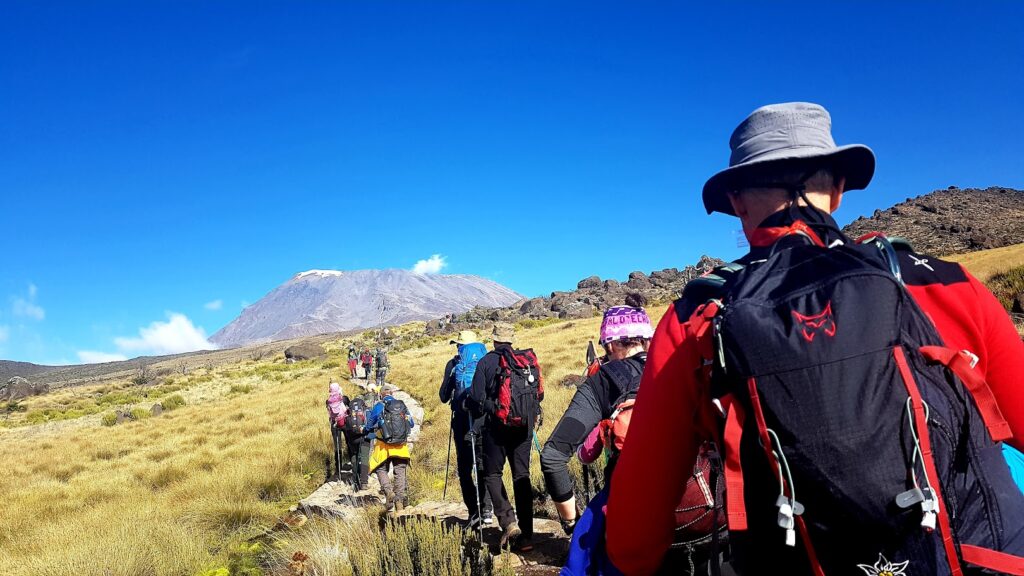
Today, after breakfast, we will begin a short but steep climb up grassy slopes. The ascent is rewarded with magnificent circular views and a true sense of wilderness. We will reach Mawenzi Tarn Hut for lunch. Afterward, we will take a nature walk to acclimatize on the slopes of Mawenzi and return to camp for dinner and overnight.
Day 5: Kibo Hut (4727m / 15509ft)
Today, we will trek across the saddle between Mawenzi Peak and Kibo Peak. This will be our last water point. On the way, we will pass the remains of a plane crash. We will stop in the middle of the alpine desert for a picnic lunch before continuing to Kibo Hut for an earlier dinner and rest in preparation for the summit.
Day 6: Uhuru Summit (5895m / 19341ft) and Descend to Horombo Hut (3727m / 12224ft)
Around 11:00 PM, you will wake up for tea, snacks, and to dress warmly for the summit. The ascent begins with a gradual climb through volcanic scree before meeting the zigzag trail, which becomes steeper as we move toward the crater rim. We will reach Gilman’s Point (5685m / 18,652ft) and take a short rest. From there, we will continue to Stella Point (5756m / 18880ft), where we will rest again, enjoy the sunrise, and take photos. We will then join other hikers from Barafu Base Camp and continue together to Uhuru Peak. At the summit, we will stay for 10-15 minutes to take pictures and enjoy the view before descending via the same route to Kibo Hut for rest and brunch. Afterward, we will descend to Horombo Hut for overnight.
Day 7: Marangu Gate (1890m / 6201ft)
After breakfast, we will descend to Marangu Gate (approximately 18 km, taking 4-7 hours). The route crosses moorland and rainforest zones. Upon arrival, you will sign out at the Kilimanjaro National Park logbook. Our guide will collect your certificate for those who successfully reach the summit. Afterward, you will enjoy a hot lunch, followed by group photos and Kilimanjaro songs with the Eastland Adventures crew. Finally, we will drive you back to your hotel in Moshi, where you can enjoy a long hot shower and a refreshing Kilimanjaro beer.