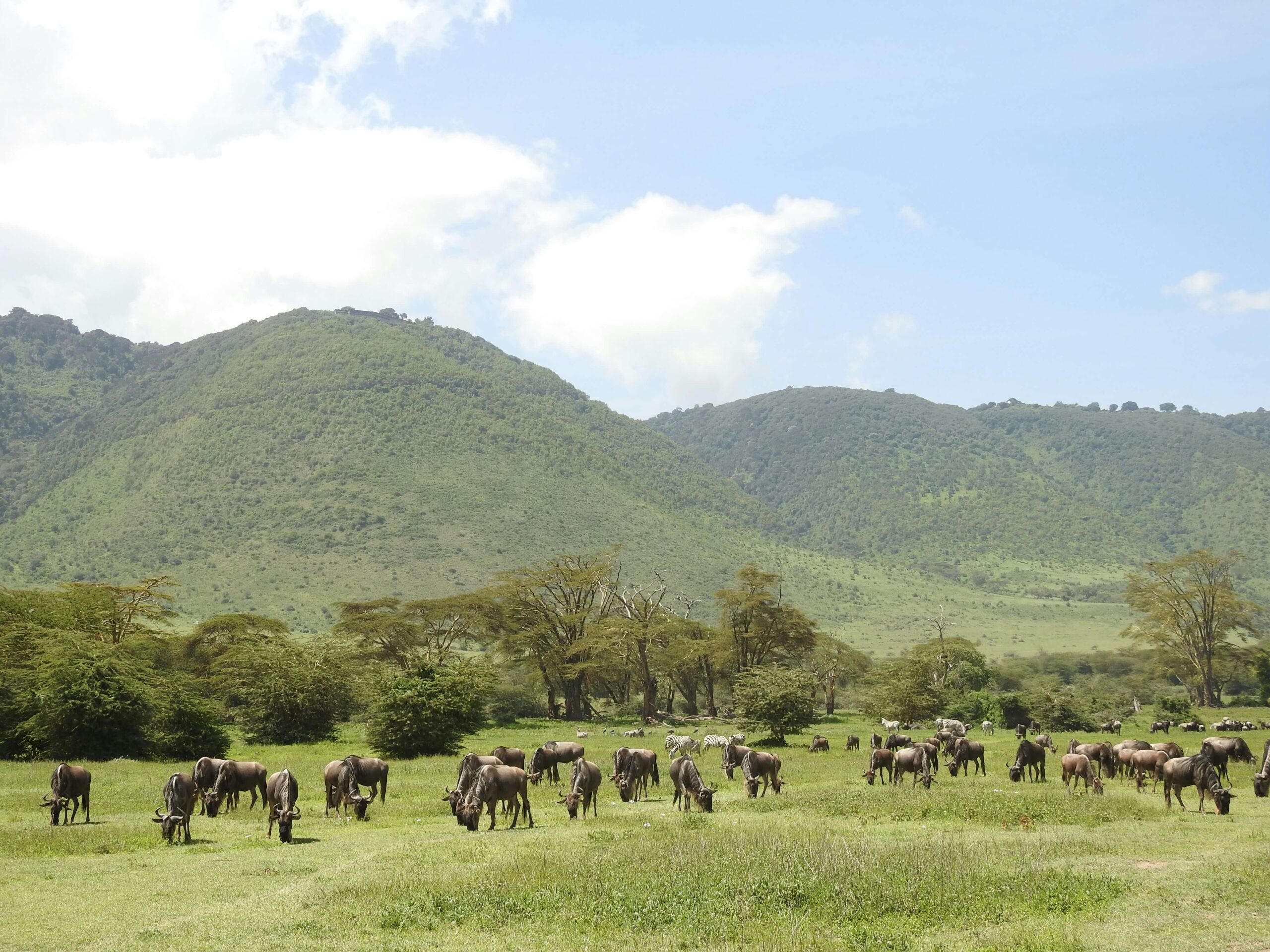
The Ngorongoro Crater, a UNESCO World Heritage site, is one of the largest unbroken volcanic calderas in the world, located in northern Tanzania. Formed millions of years ago by a volcanic eruption and collapse, it covers about 260 square kilometers and offers a unique and vibrant ecosystem. Known as the “Eighth Wonder of the World,” it is home to a remarkable concentration of wildlife, including the “Big Five” (lions, elephants, buffaloes, leopards, and rhinos), and various bird species, such as flamingos. The crater’s lush grasslands, forests, and a soda lake create diverse habitats that attract numerous animals.
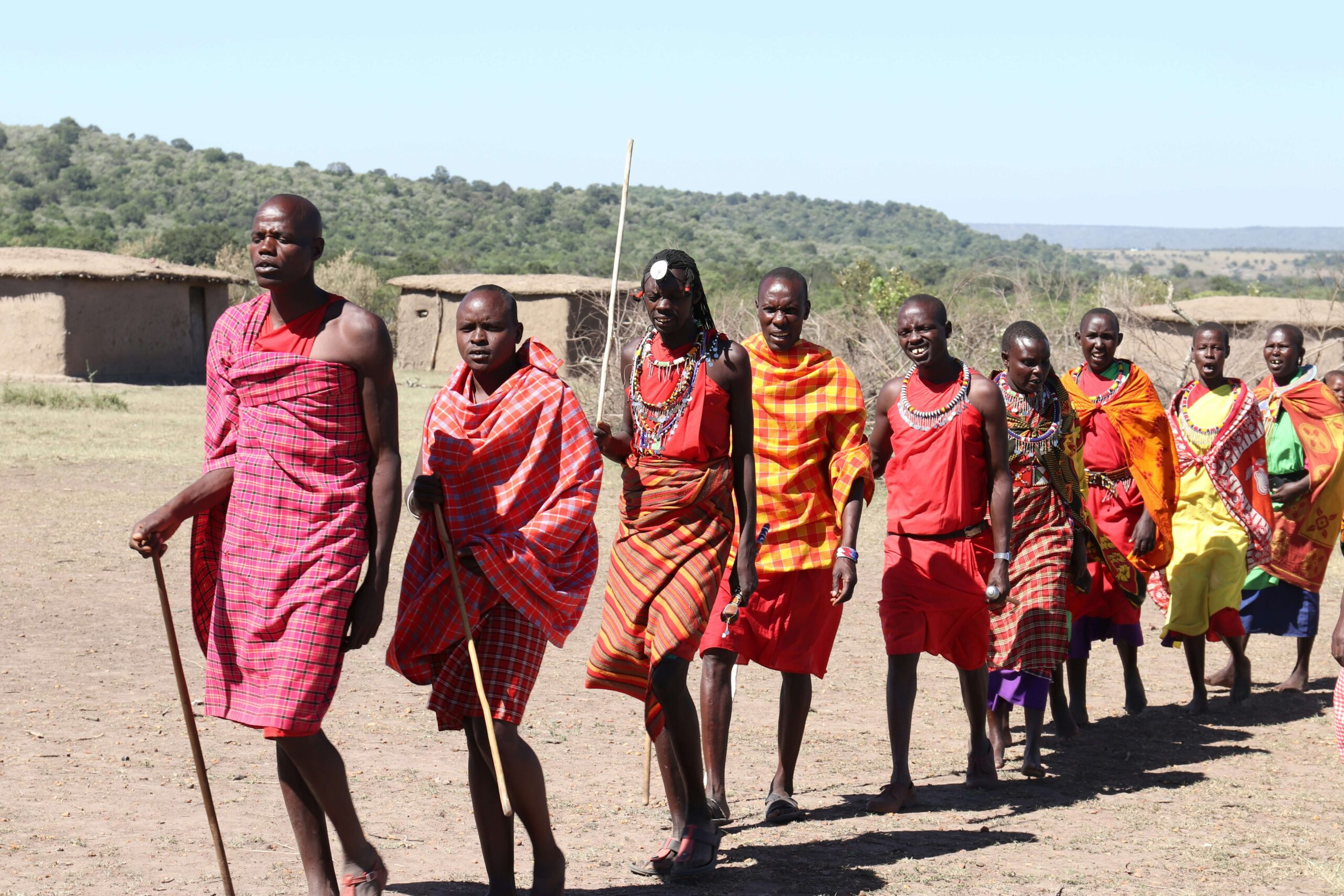
The Ngorongoro Crater is not only a natural wonder but also culturally significant. The Maasai people have lived in the area for centuries, grazing their cattle alongside the wildlife. Additionally, nearby archaeological sites, like Olduvai Gorge, reveal important insights into early human history. With its stunning biodiversity, rich cultural heritage, and breathtaking scenery, the Ngorongoro Crater is truly a “Garden of Eden” and one of the most extraordinary places to visit in Africa.